簡短答案
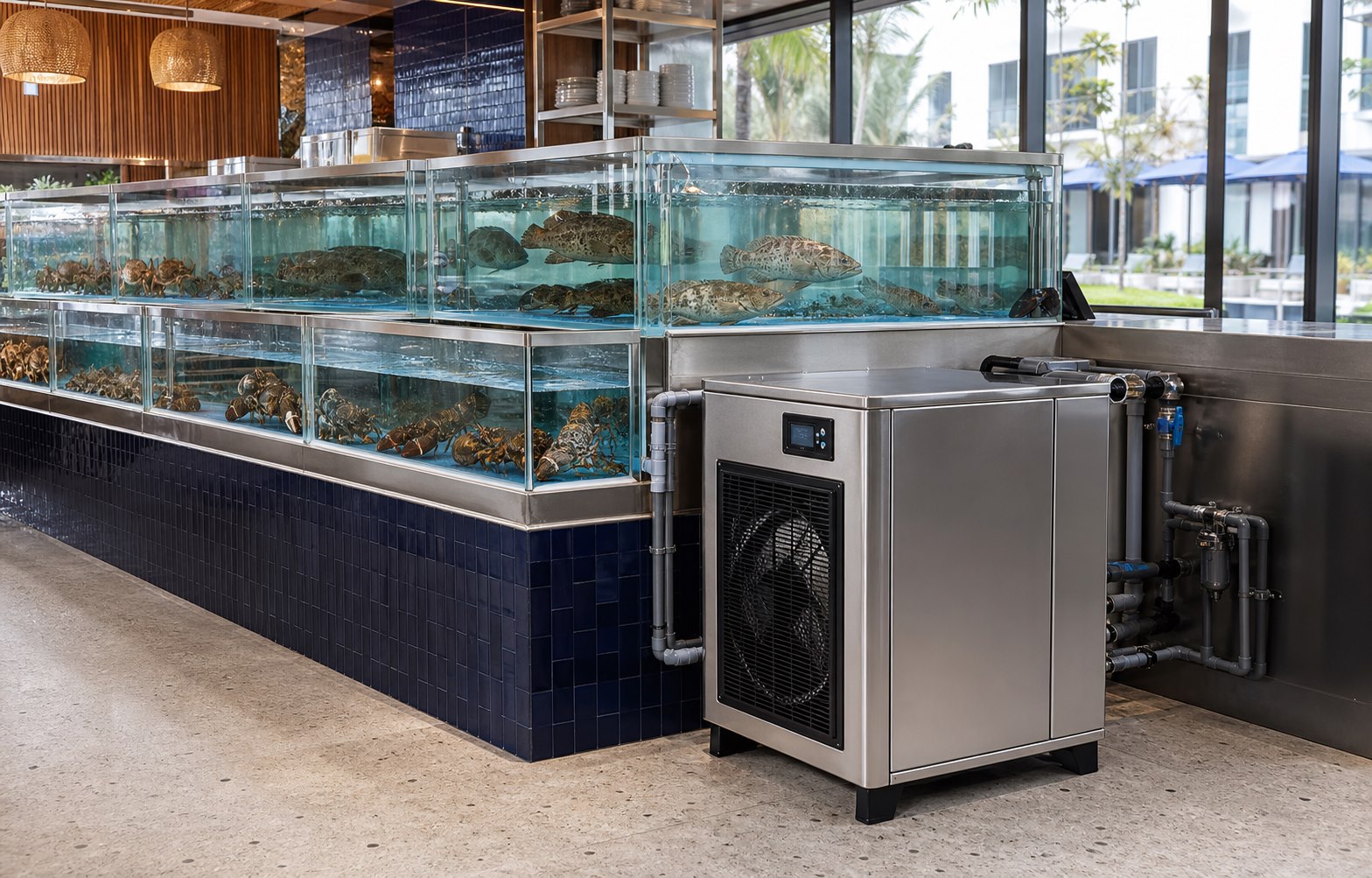
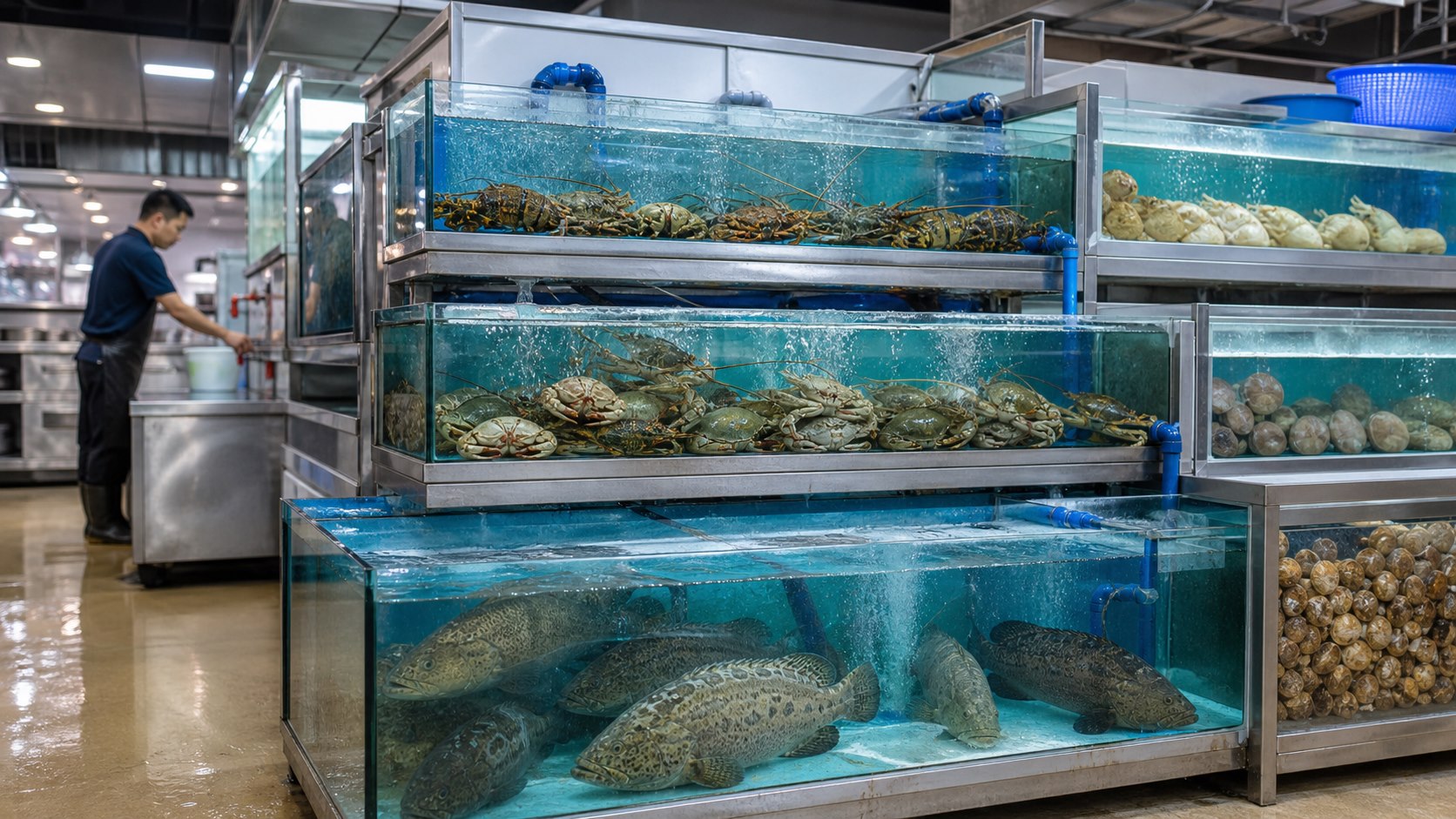
為高溫及高周轉市場環境提供穩定、節能的活鮮制冷。
常見營運痛點
- 夏季水溫上升
- 蝦蟹死亡率高
- 傳統定頻設備耗電
- 普通換熱器容易腐蝕
- 噪音影響營業環境
推薦系統配置
為高溫及高周轉市場環境提供穩定、節能的活鮮制冷。
| Water volume | Typical cooling range | Recommended configuration |
|---|---|---|
| 1,000–3,000 L | 3–6 kW | Compact inverter unit |
| 3,000–8,000 L | 6–15 kW | Commercial inverter unit |
| 8,000–20,000 L | 15–35 kW | Dual-loop or modular system |
| 20,000 L+ | Project calculation | Custom central system |
Inverter vs fixed-speed chiller
| Item | Inverter chiller | Traditional chiller |
|---|---|---|
| Capacity control | Continuously modulated | On / off cycling |
| Water temperature | More stable | Larger fluctuation |
| Energy use | Follows actual load | Higher cycling losses |
| Noise | Lower at partial load | Frequent start noise |
Frequently asked questions
How is chiller capacity selected?
Capacity is based on water volume, temperature pull-down, ambient temperature, tank insulation, circulation equipment and seafood load.
Why use a titanium heat exchanger?
Titanium provides strong corrosion resistance on the saltwater side and supports long service life in marine applications.
Can the system run continuously?
Yes. The equipment is configured for continuous commercial duty when installed with correct water flow, ventilation and maintenance access.